
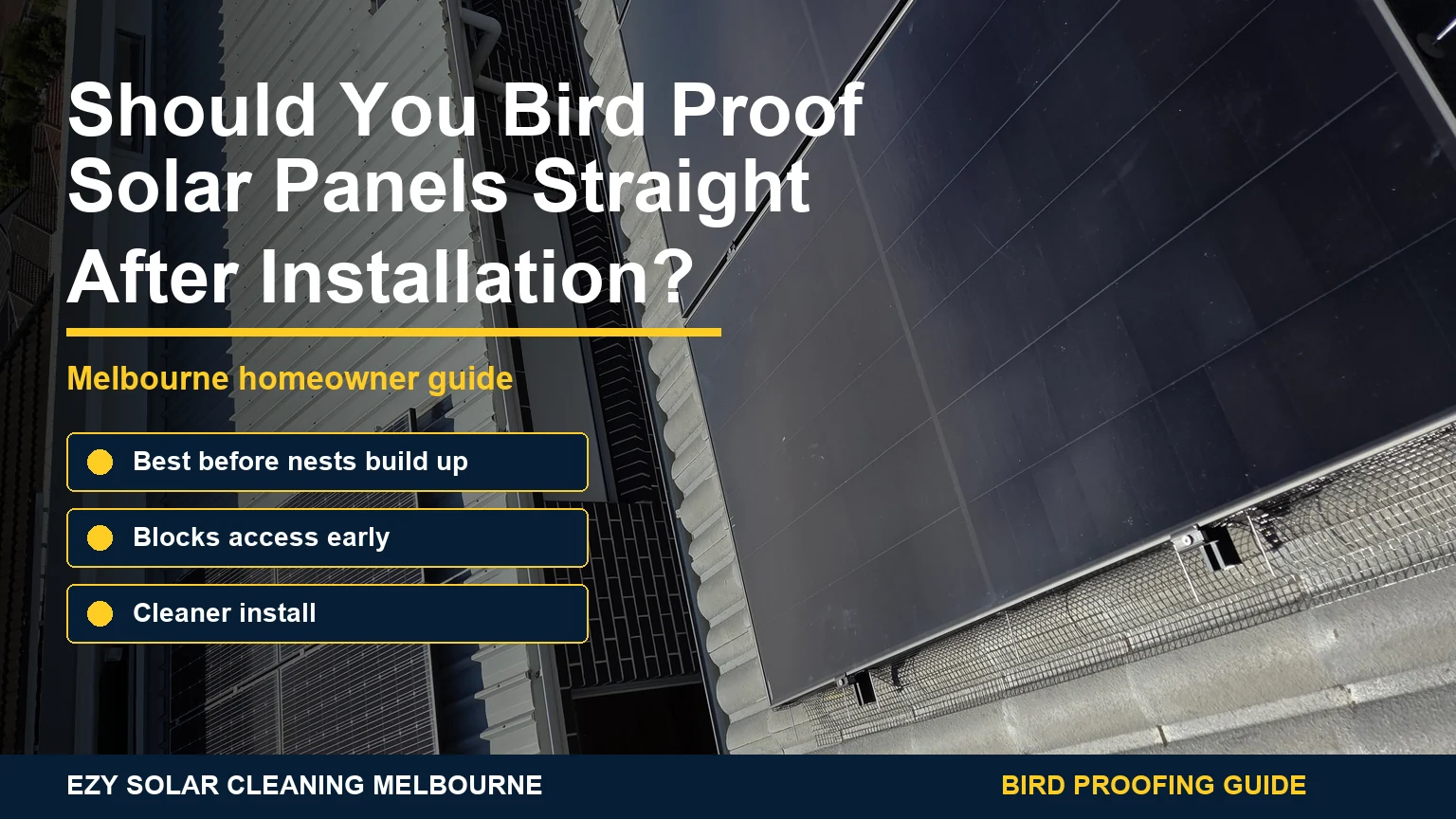
Bird proofing straight after solar installation is often the cleanest time to do it, but it is not always urgent for every Melbourne home. The better question is whether your new system creates the kind of protected gap pigeons like: shade, warmth, cover from weather, and a quiet edge where they can start nesting without being disturbed.
In Melbourne, we see both sides of this. Some homeowners call only after the noise, droppings, and nesting material are already obvious. Others ask about solar panel bird proofing in Melbourne while the solar panels are still new because they have seen what happened next door or on a previous property. The second path is usually easier because there is less mess to remove and less bird habit to break.
Why early bird proofing can make sense
Freshly installed panels often leave a clear cavity underneath. From the ground, the system may look neat and complete, but to pigeons it can be a sheltered nesting platform. Once birds start using it, the problem can build quietly. The first signs might be soft cooing in the morning, a few droppings near the gutter, or birds landing on the ridge before disappearing under the array.
Bird proofing works differently from cleaning. Cleaning removes what is already there. Mesh blocks the access point so pigeons cannot keep moving in under the panels. If the barrier is installed before nesting begins, the job is usually simpler and the roof is not already carrying months of debris.
When it is worth acting straight away
Early installation is worth considering if pigeons are common in your street, if birds already sit on neighbouring roofs, if your panels are close to gutters or roof valleys, or if the system has multiple panel rows with easy entry points. It is also worth thinking about if you are in a Melbourne suburb where pigeon pressure is already visible around shopping strips, train lines, older rooflines, or dense residential pockets.
This does not mean every brand-new solar system needs emergency work. It means prevention is often cheaper and cleaner than waiting until birds have treated the panels as home. If you are unsure, a practical inspection is better than guessing.
What should be checked before installing mesh
A proper bird proofing decision starts with the actual roof and solar layout. The installer should check the full perimeter of the panels, not just the side visible from the ladder. Corners, tight gaps, rail positions, split arrays, cabling, gutters, and roof obstacles all affect how neatly the mesh can be fitted.
The right setup uses black PVC-coated stainless steel mesh and solar-specific clips. The point is to attach to the solar panel frame without drilling into the panels or roof. Shortcuts like plastic mesh, chicken wire, cable ties, or partial coverage can leave gaps that birds find later.
Early bird proofing vs waiting
| Option | Best fit | Main trade-off |
|---|---|---|
| Bird proof soon after solar installation | Homes with known pigeon activity nearby | Upfront cost before the problem is obvious |
| Wait and monitor | Homes with no bird activity around the roof | Needs regular attention so early signs are not missed |
| Wait until nesting starts | Only when the issue is genuinely uncertain | Usually more mess, cleaning, and disruption later |
Do the panels need cleaning at the same time?
If the system is brand new, cleaning may not be needed. If birds have already been active, cleaning can be part of the same visit. Nesting material, droppings, and gutter debris should be removed before mesh is fitted, otherwise the barrier can trap the mess in place. For panels that are already dirty, solar panel cleaning can be added where appropriate.
For cost planning, the roof layout, number of panels, access, debris level, and cleaning needs matter more than a generic square-metre price. The Melbourne pricing page is the better place to start, and a property-specific quote is still important.
Practical answer for Melbourne homeowners
If you already see pigeons landing near the new panels, bird proofing early is usually a sensible move. If there is no bird pressure at all, watch the roof for the first few months and act at the first clear sign of birds entering under the panels. The mistake is waiting until noise, droppings, nesting material, and blocked gutters make the problem impossible to ignore.
For more context, read about how to prevent birds from nesting under solar panels, or contact EZY Solar Cleaning Melbourne through the contact page if you want the system checked properly.