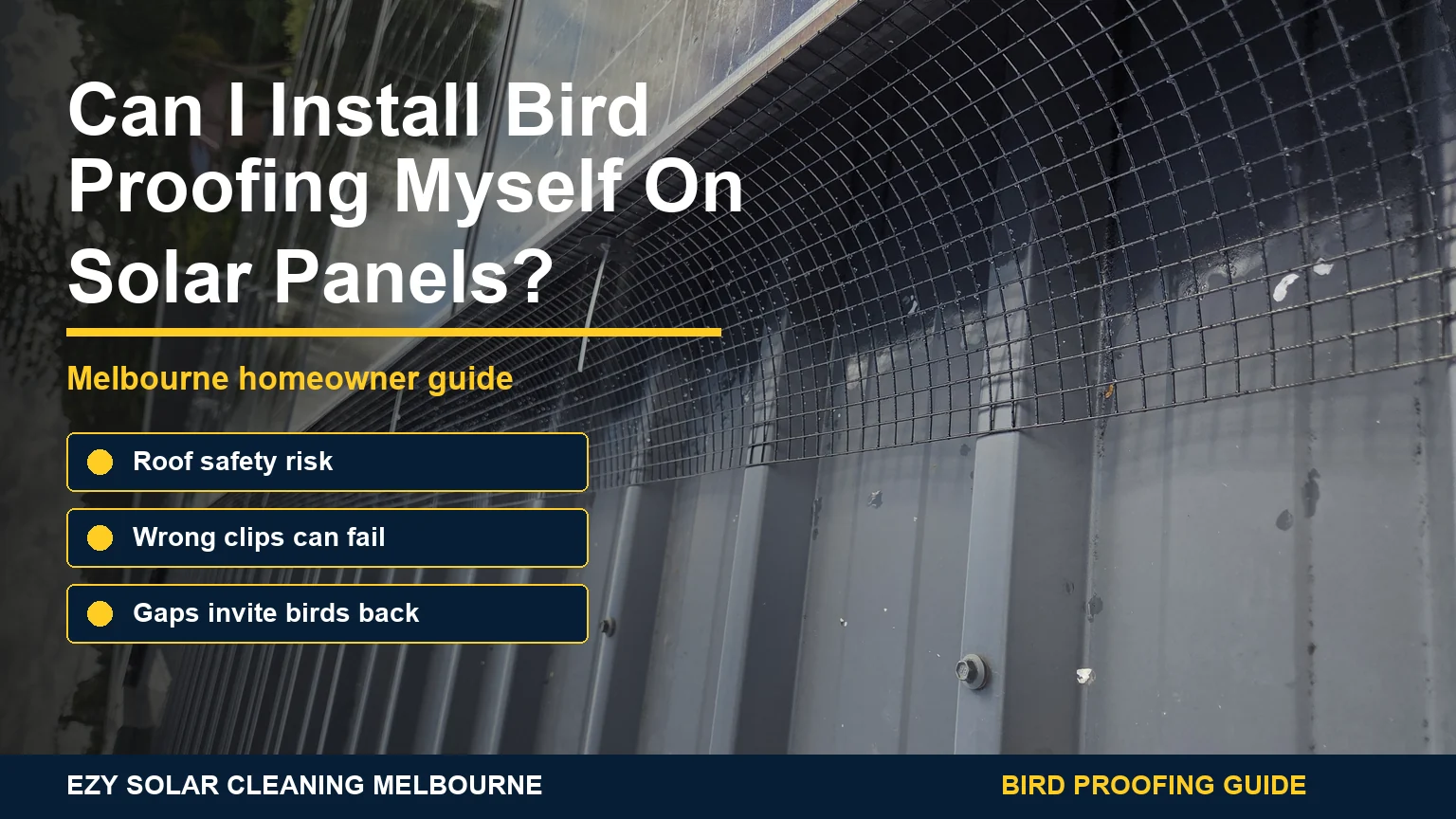
DIY bird proofing can look tempting when pigeons start sitting around your solar panels. The idea seems simple: buy some mesh, climb up, block the gap, and save money. The problem is that solar panel bird proofing only works well when the barrier is secure, neat, complete, and installed without damaging the system or the roof.
For Melbourne homeowners, the risk is not just whether the mesh goes on. It is whether it stays in place, protects every entry point, and does not create a new problem later. A rushed DIY job can leave birds with a smaller but still usable gap, trap debris under the panels, or make future cleaning harder.
Why DIY jobs often fail
Pigeons are persistent. If they have already used the space under the panels, they may keep testing the edges after you block the first obvious opening. They do not need the whole side open. A corner gap, loose section, lifted mesh edge, or missed back row can be enough.
Many DIY products are also not designed for solar panels. Plastic gutter guard, soft netting, chicken wire, cable ties, and adhesive fixes can break down, sag, or look messy. Some materials may appear fine from the ground for a few weeks, then fail once wind, heat, rain, and bird pressure work on them.
The attachment method matters
Professional solar panel bird proofing should attach to the panel frame with solar-specific clips. The aim is to avoid drilling into the solar panels or the roof. Drilling, gluing, or forcing fixings where they do not belong can create issues that cost more than the original job.
The mesh also needs to be shaped around panel corners, rails, roof ridges, gutters, and split arrays. A neat finish matters for appearance, but it also matters for performance. If the mesh sits too loose, birds can push against it. If it is cut poorly, it can leave gaps. If it is too rigid or badly fitted, it can look untidy from the street.
Safety is part of the decision
Roof work is not the same as a weekend job at ground level. Melbourne homes may have double-storey access, tiled roofs, steep pitches, fragile edges, or awkward panel positions near gutters. Working around solar equipment adds another layer of caution. Even if the material cost looks low, the access risk is real.
If there is already nesting material under the panels, the job is also messier. Droppings, feathers, and debris should be handled carefully. You may also need solar panel cleaning or roof-area cleanup before the mesh is fitted.
DIY vs professional bird proofing
| Area | DIY risk | Professional approach |
|---|---|---|
| Mesh material | May use plastic, netting, or unsuitable wire | Uses durable bird mesh suitable for solar panel edges |
| Fixing method | Can rely on ties, glue, or improvised fasteners | Uses solar-specific clips without drilling into panels |
| Coverage | Easy to miss back edges and corners | Checks the full perimeter of the array |
| Cleanup | May leave nests or droppings trapped underneath | Removes accessible debris before sealing the space |
| Access | Homeowner carries the roof-work risk | Handled as a roof-based service visit |
When DIY might be a false economy
The cheapest job is not cheap if it has to be removed and redone. We have seen situations where homeowners tried spikes, improvised mesh, or partial barriers before calling for a proper installation. The second visit then has to fix the original pigeon issue and tidy up the failed solution.
If cost is the main concern, it is better to compare the actual scope. The pricing page explains the kinds of factors that affect the quote, including panel count, access, roof type, debris, and cleaning needs.
Practical answer
You can buy materials yourself, but that does not make DIY bird proofing a good choice for most solar systems. If the roof is low, simple, and there are no birds yet, some homeowners may still be tempted. Once pigeons are active, the better solution is usually a proper full-perimeter installation.
For more context, compare this with bird mesh vs spikes for solar panels, or contact EZY Solar Cleaning Melbourne through the contact page if you want the roof assessed.