
Pigeons do not usually choose a roof because they like solar panels. They choose it because the panels create a protected gap that feels safe, dry and hard to reach. In Melbourne, that sheltered space can become a perfect nesting area, especially when the roof line gives birds easy landing points nearby.
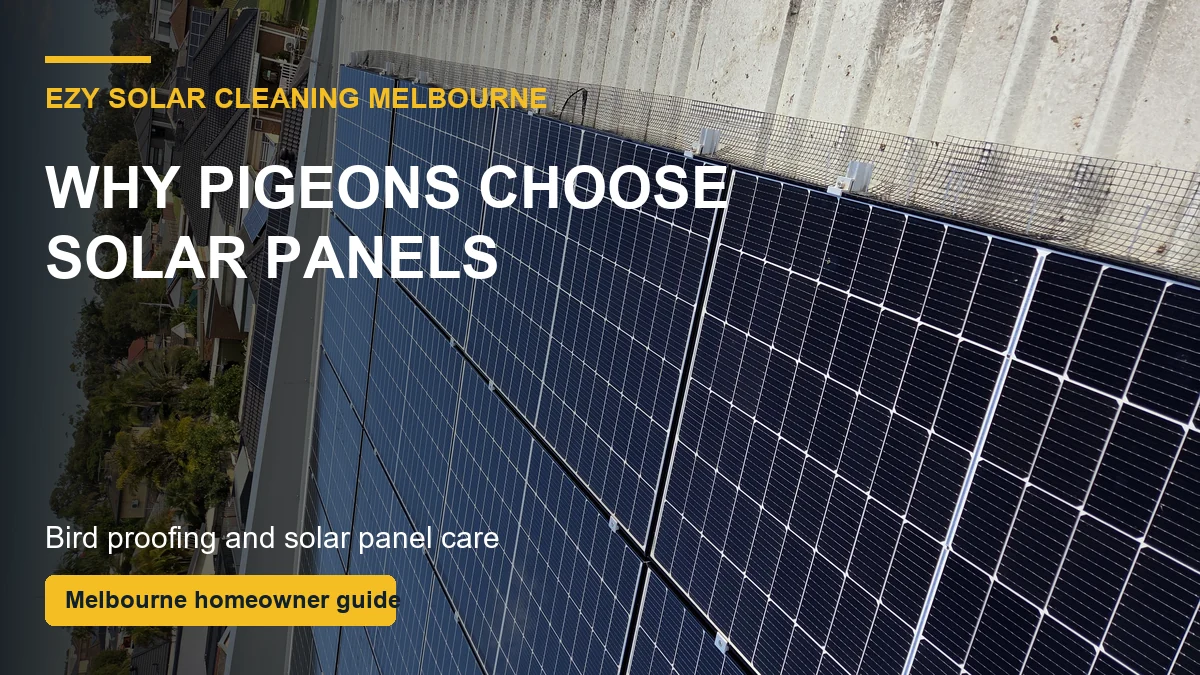
That is why solar panel bird proofing in Melbourne is less about scaring birds away and more about closing the access point. If pigeons cannot get underneath the panels, they lose the nesting spot that keeps bringing them back.
The gap under the panels is the real attraction
A solar array creates a small roof cavity with shade above, warmth from the roof surface, and protection from wind and rain. From a pigeon’s point of view, it is much better than an exposed gutter or open roof tile. Once birds start using that space, they often keep returning because it has become familiar.
The problem usually starts quietly. A homeowner may see one or two birds sitting near the panels, hear cooing in the morning, or notice sticks in one gutter section. By the time nesting material is visible from the ground, there may already be a lot more mess under the panels than expected.
Why Melbourne homes can attract repeat bird activity
Pigeons are common across Melbourne, and owner experience shows they do not follow one neat season. Activity rises and falls in waves. Summer is often busier, winter may be quieter, but nesting problems can appear at different times of the year.
Another common pattern is local movement. If a nearby house blocks off access under its panels, pigeons may not leave the suburb. They may try the next roof that offers a similar sheltered area. That is one reason a roof with no history of birds can suddenly become active.
What pigeons are looking for
Most bird activity around solar panels comes back to shelter, habit and access. The birds want a place where they can sit out of the weather, build nesting material, and come and go without being disturbed.
| What pigeons like | How it shows on the roof |
|---|---|
| A covered gap | Birds disappear underneath the panels |
| A familiar landing point | The same birds return each morning |
| Loose nesting material | Sticks, feathers or eggshells appear near gutters |
| Quiet shelter | Cooing or scratching sounds come from the roof |
Why the problem can grow if it is ignored
One or two birds can look harmless from the driveway. The problem is that pigeons are not just visiting once. If they decide the roof is a safe nesting location, they can keep adding sticks, feathers and droppings underneath the panels. Homeowners often only see a small part of the mess from ground level.
Over time, the roof can collect debris around panel edges, in gutters and in sheltered corners. That is when a simple prevention job can become a bigger clean-out. The owner experience behind EZY’s advice is that waiting usually does not make an established nesting site easier to fix.
Why deterrents often disappoint
Spikes, plastic objects and noise-style deterrents may work on ledges, but they do not close the cavity underneath a solar array. Birds can land beside them, walk around them, or simply enter from a different edge. That is why a physical mesh barrier is usually a better fit than bird spikes for solar panels.
A proper bird proofing job seals the full perimeter with black PVC-coated stainless steel mesh and solar-specific clips. It should not require drilling into panels or the roof, and it should be installed neatly around corners, brackets and obstacles.
Why the birds may still visit after bird proofing
Homeowners sometimes worry if pigeons sit on the roof after the mesh is installed. That does not automatically mean the job has failed. Pigeons may return to inspect the old nesting spot, especially if they had been using it for a long time.
The real test is access. If the mesh has no gaps and the birds cannot get underneath, the main nesting area has been removed. Over time, they usually stop wasting energy on a space they can no longer enter.
When to act
The best time is before the problem becomes established. If birds are already sitting near the panels, bringing sticks back, or making noise under the array, it is worth arranging an inspection before the roof collects more nesting material and droppings. You can also read more about how to prevent birds from nesting under solar panels if the activity is still early.
This is especially relevant after a new solar installation. Fresh panels can create a new sheltered roof space overnight, and birds may discover it before the homeowner notices a pattern. Bird proofing straight after installation is often simpler than returning later after nesting material has built up.
For Melbourne homeowners, the practical message is simple: pigeons choose the shelter, not the panels themselves. Remove access to the shelter and the roof becomes far less useful to them.
FAQs
Why do pigeons go under solar panels?
They use the gap under the panels as shelter from weather and disturbance. It can become a nesting area if access is left open.
Are pigeons attracted to solar panels themselves?
Usually no. They are attracted to the protected space created underneath the panels.
Will pigeons leave if I wait long enough?
Sometimes activity drops, but established birds often keep returning. Waiting can allow more nesting material and droppings to build up.
Does bird proofing scare pigeons away?
No. Proper bird proofing works by physically blocking access under the panels.
Can pigeons still sit on the roof after mesh is installed?
Yes, they may still sit nearby for a while. The key point is whether they can still get underneath the panels.