
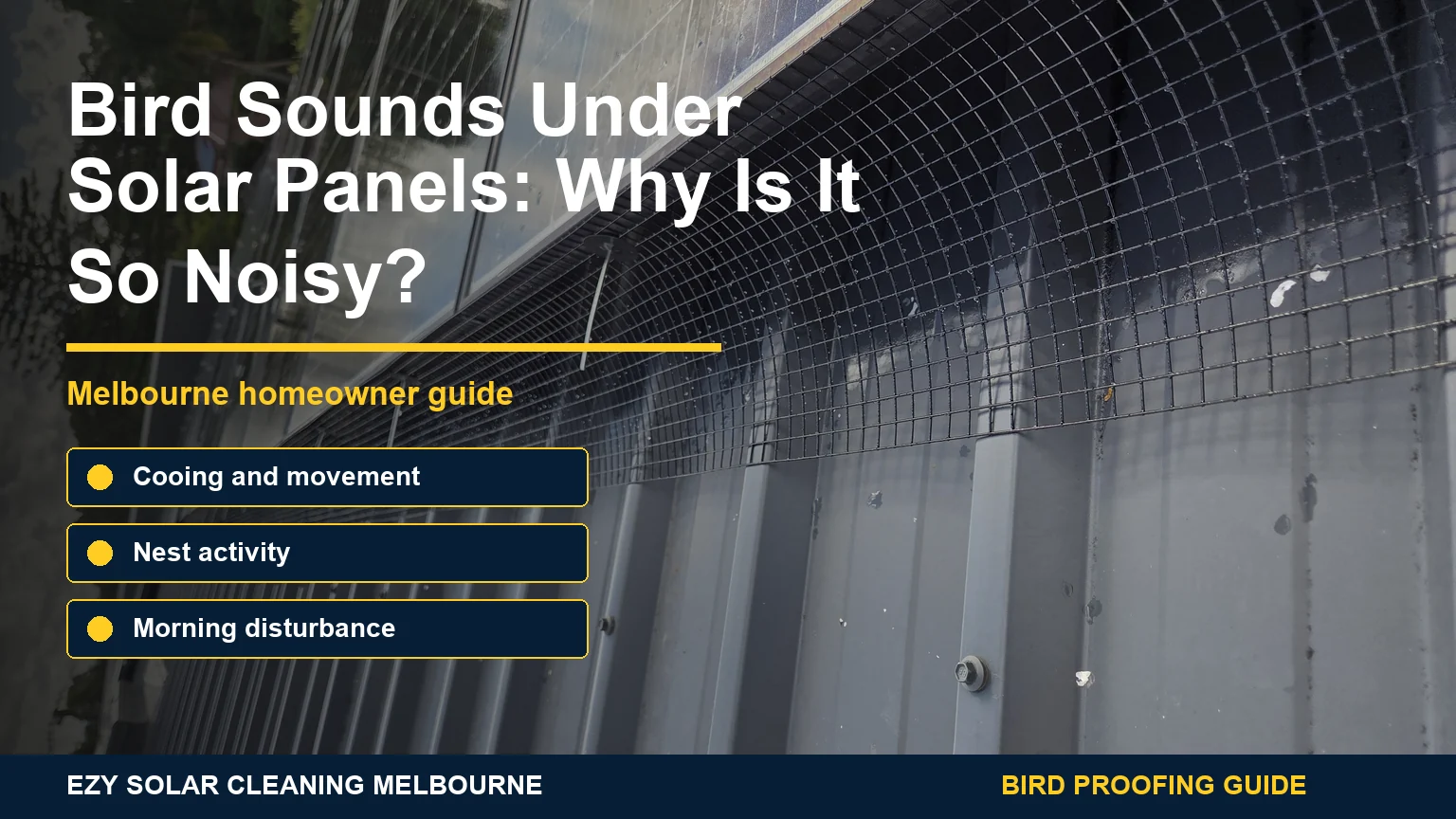
Bird sounds under solar panels are usually noisy because the panels create a sheltered pocket where pigeons can land, walk, nest, and communicate without being exposed. The sound can seem louder than expected because it travels through the roof space and repeats at the same times of day.
Melbourne homeowners often notice it first in the early morning. Cooing, scratching, fluttering, and movement near the gutter line can all point to birds using the space under the panels. The noise is annoying, but it is also useful: it tells you the birds may be doing more than just sitting on the roof.
Why panels attract noisy bird activity
Solar panels provide cover. There is shade, protection from weather, and enough space under many arrays for pigeons to move around. Once a pair finds a good spot, they may keep returning. If nesting begins, the activity becomes more regular and the sound can become part of the morning routine.
The noise is not always directly under the room where you hear it. Sound can travel through roof framing, ceiling cavities, metal gutters, and tiles. That is why a homeowner might hear birds above a bedroom even when the actual entry point is closer to the panel edge or gutter.
What different sounds can mean
| Sound | Possible cause | What to check safely |
|---|---|---|
| Cooing | Pigeons resting or nesting under panels | Birds sitting near the same section most days |
| Scratching or tapping | Movement on tiles, rails, or panel edges | Activity around the panel perimeter |
| Fluttering | Birds entering or leaving the cavity | Birds disappearing under the array |
| Debris movement | Nesting material shifting in wind or rain | Sticks, feathers, or straw near gutters |
These signs do not prove the full extent of the issue from the ground, but they are enough reason to inspect further. If you can see pigeons entering under the panels, the access point is already confirmed.
Why the noise often gets worse
Birds become more attached to a roof once they have started nesting. They may return after being disturbed, and if neighbouring homes are bird proofed, pigeons can shift to the next available roof. Melbourne pigeon pressure can move locally like that, which is why one home may suddenly develop a problem after nearby work has been done.
The longer the birds stay, the more the roof can collect droppings, feathers, and nesting material. Noise is only the part you hear. The mess is often hidden until someone gets close enough to check around the panels and gutters.
What not to rely on
Scare devices, spikes beside the panels, and one-off nest removal can reduce visible activity for a short time, but they usually do not close the cavity under the array. Pigeons can land beside spikes, walk around them, and keep using the sheltered space if the entry point remains open.
The long-term fix is usually a correctly installed mesh barrier around the solar panel perimeter. EZY Solar Cleaning Melbourne uses solar panel bird proofing to block the space underneath rather than trying to scare birds away from the whole roof.
When cleaning is needed too
If the noise has been going on for a while, there may already be droppings and nesting material on the roof. In that case, the job may include debris removal and, where needed, solar panel cleaning. Cleaning alone does not stop the birds returning, but it can remove the mess before the mesh seals the area.
You can also read more about pigeons nesting under solar panels in Melbourne and whether birds under panels can cause damage.
Practical answer
If the sounds happen once or twice, watch the roof. If they happen most mornings, or you see birds going under the panels, treat it as an early warning. The sooner the access point is closed, the less chance birds have to build a settled nesting site under the solar array.
For help checking the issue, use the Melbourne contact page and send clear photos of the roof and panel layout if you can do so safely from the ground.