
One of the most common questions homeowners ask before installing bird proofing is:
“Will bird proofing void my solar panel warranty?”
It’s a fair question.
After all, solar systems are a significant investment, and nobody wants to do anything that could potentially affect their warranty coverage.
The challenge is that there isn’t a single answer that applies to every solar panel manufacturer, installer or warranty agreement.
Every company has its own terms and conditions.
However, there are some important things homeowners should understand about how professional bird proofing is typically installed and why installation methods matter.
In this guide, we’ll explain what bird proofing involves, why warranty concerns are so common, and what to look for when choosing a bird proofing company.
Why Homeowners Worry About Their Warranty
In our experience, warranty concerns are one of the biggest reasons homeowners hesitate before booking bird proofing.
Many people assume bird proofing involves:
- Drilling into the solar panels
- Drilling into the roof
- Modifying the solar system
- Attaching materials directly to the panels
When homeowners picture someone making permanent changes to their solar installation, it’s understandable that warranty concerns arise.
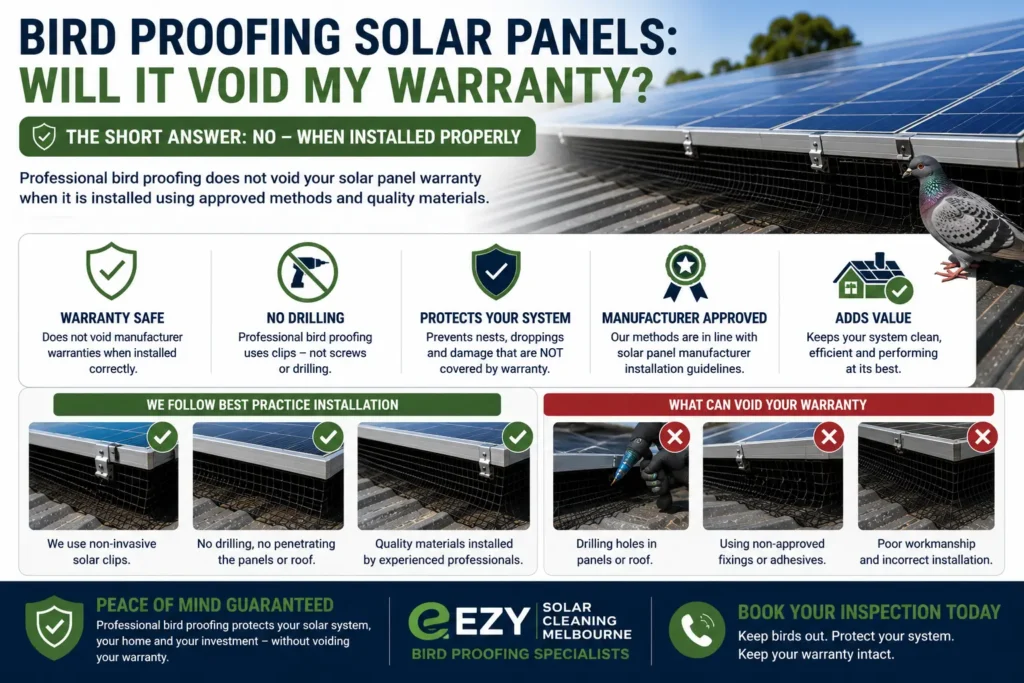
The good news is that professional bird proofing systems are typically designed to be installed without making invasive modifications to the solar panels themselves.
How Professional Bird Proofing Is Usually Installed
A properly installed solar panel bird proofing system generally uses specialised solar clips that attach the bird proofing mesh to the frame of the solar panels.
The key point is that the installation is typically non-invasive.
In most cases:
- No drilling is required
- No glue is required
- No welding is required
- No modifications to the solar panels are required
Instead, the mesh is secured around the perimeter of the solar array using purpose-designed clips that attach safely to the panel frame.
This is one reason many homeowners feel much more comfortable once the installation process is explained to them.
The Most Common Misunderstanding
One thing we’ve noticed over the years is that many homeowners simply don’t know how bird proofing is attached.
When they first contact us, they often ask:
- “Are you going to drill into the panels?”
- “Will you need to put holes in the roof?”
- “How is the mesh attached?”
Once we explain that professional bird proofing normally uses specialised solar clips rather than drilling or gluing, most people immediately feel more comfortable with the process.
The concern usually comes from not understanding how the system works rather than from the bird proofing itself.
Why Installation Method Matters
Not all bird proofing installations are created equal.
While professional bird proofing systems are generally designed to be non-invasive, we’ve unfortunately seen some poor installation methods over the years.
This is where homeowners need to be careful.
Installation Methods We’ve Seen That Raise Concerns
Examples of poor workmanship we’ve encountered include:
- Screws drilled into solar panel frames
- Mesh glued directly to solar panels
- Improvised attachment methods
These types of installations are very different from a properly installed clip-based system.
Whenever someone is considering bird proofing, it’s worth asking exactly how the mesh will be attached and whether any drilling, gluing or modifications are involved.
Does Bird Proofing Automatically Void a Warranty?
This is where it’s important to be careful.
We cannot comment on the warranty terms of every solar panel manufacturer, installer or product available in Australia.
Every warranty agreement is different.
For that reason, no bird proofing company should make blanket claims about every warranty on the market.
What we can say is that professional bird proofing systems are generally designed to be installed without drilling, gluing or modifying the solar panels.
If you’re concerned about your specific warranty, the safest approach is always to:
- Review your warranty documentation
- Contact your solar installer
- Speak directly with the manufacturer if required
This gives you certainty regarding your individual warranty conditions.
Why Choosing the Right Installer Is Important
The quality of the installation often matters just as much as the materials themselves.
When comparing bird proofing providers, it’s worth asking:
- What type of mesh will be used?
- How will it be attached?
- Are specialised solar clips used?
- Will any drilling be required?
- Have they installed bird proofing on similar systems before?
As we’ve discussed in Professional Bird Proofing Solar Panels Melbourne: What to Expect, experienced installers generally follow a process designed to protect the solar system while effectively preventing birds from accessing the area underneath the panels.
Can Bird Proofing Be Added to Existing Solar Panels?
Yes.
In fact, most bird proofing jobs involve existing solar systems.
Many homeowners assume bird proofing can only be installed when the solar panels are first fitted.
That simply isn’t true.
As covered in Can You Add Bird Proofing to Existing Solar Panels?, bird proofing is commonly installed on systems that have been operating for years.
The important factor is using the correct installation method.
Why Bird Proofing Is Often Worth Considering
While warranty concerns are understandable, it’s also worth considering the risks of leaving a pigeon problem unresolved.
Over time, nesting activity can contribute to:
- Large accumulations of droppings
- Nesting debris
- Blocked gutters
- Ongoing roof contamination
- Increased maintenance requirements
As discussed in What Happens If You Don’t Bird-Proof Your Solar Panels?, many homeowners ultimately decide that preventing long-term bird problems is worth the investment.
The key is ensuring the bird proofing is installed properly.
Questions to Ask Before Installing Bird Proofing
If you’re concerned about warranties, these are some of the best questions to ask before proceeding:
How Is the Mesh Attached?
A reputable installer should be able to clearly explain the installation method.
Will Any Drilling Be Required?
Professional bird proofing systems generally should not require drilling into the solar panels.
Are Specialised Solar Clips Used?
Purpose-designed solar clips are commonly used to secure mesh safely to the panel frame.
Can You Explain How This Relates to My Warranty?
A good installer should be transparent about the installation process and encourage homeowners to review their warranty documentation if they have concerns.
Frequently Asked Questions
Will bird proofing void my solar panel warranty?
Warranty terms vary between manufacturers and installers. If you are concerned about your specific warranty, review your warranty documentation or speak directly with your solar provider.
How is bird proofing attached to solar panels?
Professional bird proofing systems are commonly installed using specialised solar clips that attach the mesh to the panel frame.
Does bird proofing require drilling?
A properly installed bird proofing system generally should not require drilling into the solar panels.
Can bird proofing be installed without damaging the panels?
Professional bird proofing systems are typically designed to be non-invasive and avoid permanent modifications to the solar panels.
What installation methods should I avoid?
Be cautious of installations involving drilling into solar panel frames, gluing mesh directly to panels or other improvised attachment methods.
Can bird proofing be added to existing solar panels?
Yes. Most bird proofing jobs are completed on existing solar systems rather than brand-new installations.
Why do homeowners worry about warranties?
Many people mistakenly assume bird proofing requires drilling into the panels or roof. Once they understand how clip-based systems work, they often feel much more comfortable.
Should I check my warranty before installing bird proofing?
Yes. Because warranty terms vary between manufacturers and installers, reviewing your specific warranty documentation is always a sensible step.